Answer first
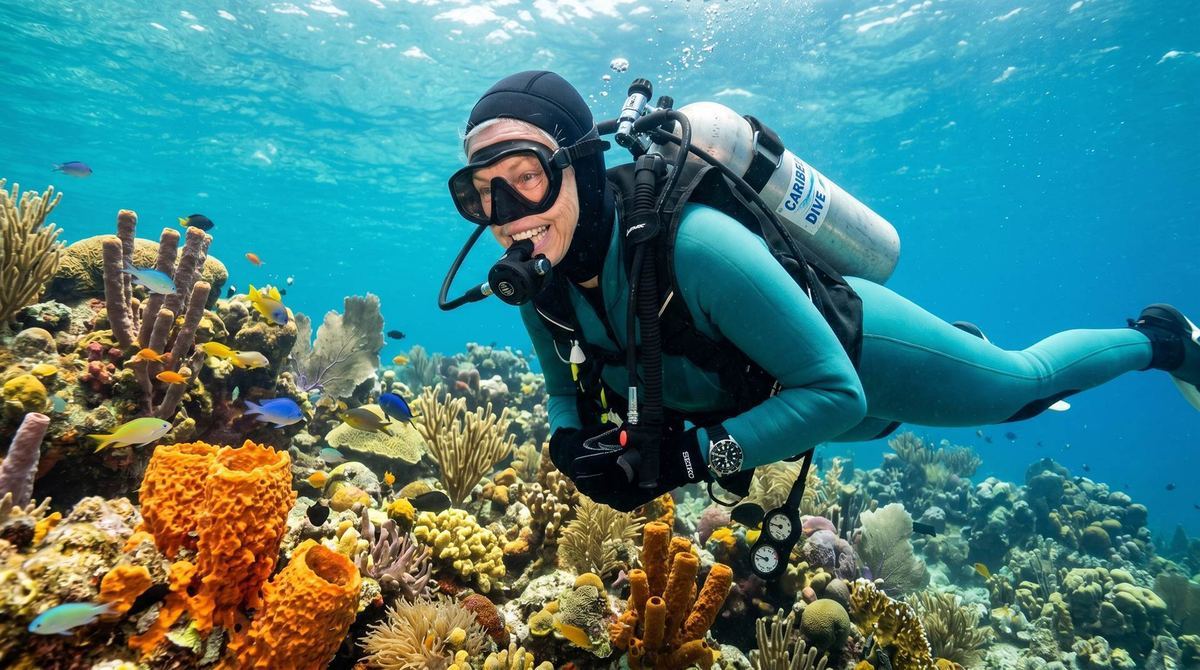
A dive wetsuit is built for warmth over long, still immersion: 5 mm for 8–12 °C (46–54 °F) water, 7 mm back-zip with sealed seams (hood on request) for water below 8 °C (below 46 °F). GBS seams taped inside are the minimum at 5 mm; sealed seams plus wrist and ankle seals are the standard at 7 mm. Dive schools order 5 mm first — it covers the widest teaching water.
Thickness ↔ water temperature for diving
| Thickness | Water °C | Water °F | Best for |
|---|---|---|---|
| 3 mm fullsuit | 19–23 °C | 66–73 °F | Warm-water diving, tropical dive schools |
| 5 mm fullsuit | 8–12 °C | 46–54 °F | Cool-water diving — the standard dive suit |
| 5/4 mm fullsuit | 8–12 °C | 46–54 °F | Cool-water diving with freer arms |
| 7 mm back-zip | Below 8 °C | Below 46 °F | Coldest water diving |
Water-temperature ratings are a guide only, not a guarantee of warmth. Depth, dive length, and whether the diver moves or stays still change the answer — a diver hovering for photography gets cold faster than a diver swimming.
Models for diving
| Model | Thickness | Features | Best for |
|---|---|---|---|
| Scuba wetsuit 5 mm, back-zip — men | 5 mm | Back-zip, GBS seams taped inside, nylon lining | Dive brands, retailers, dive schools |
| Scuba wetsuit 7 mm, back-zip — men | 7 mm | Sealed seams, back-zip, hood on request | Cold-water diving, dive schools in cool seas |
| Snorkel wetsuit 2 mm shorty, back-zip — men | 2 mm | Short arms and legs, flatlock seams | Warm-water diving, snorkel crossover, rental fleets |
What makes a good dive suit
- Seams decide warmth. At 5 mm and up, the seam matters as much as the
thickness. GBS taped inside is the minimum; sealed (taped) seams are the standard for 7 mm dive suits. Flatlock has no place on a dive suit below 20 °C water.
- Back-zip entry. Back-zip is the standard entry for dive suits — easy
to get in and out of with gloves on, and the long zip sits under the BCD. Chest-zip is available on request.
- Hood and seals on 7 mm. The 7 mm suit can be ordered with an attached
hood and smooth-skin wrist and ankle seals that limit water flushing — the flushing of cold water in and out of the suit is what makes a diver cold. Confirm hood and seals on your sample.
- Knee and seat reinforcement. Dive suits wear at the knees and seat
from boat decks and rocky entries. Reinforced panels are standard on our dive suits — confirm the panel material on your sample.
- Sizing for dive schools. Schools order a size run, not a single size.
Tell us the size split when you order; the split is part of the confirmed spec. See the size guide.
Internal links
- Thickness guide: Wetsuit Thickness ↔ Water Temperature
- Seam guide: Wetsuit Seams: GBS vs Flatlock vs Sealed
- Products: Scuba wetsuit 5 mm, back-zip — men,
Scuba wetsuit 7 mm, back-zip — men
- Fabric by the metre:
fabrics.neoprenecustom.com
FAQ
What to ask the factory: thickness (5 mm or 7 mm), seam type (glued and blindstitched, taped or not), men / women sizes, colour number, and whether the suit needs a hood, boots or gloves to match.
Specifications
| Category | Dive and Scuba Wetsuits |
|---|---|
| Thickness | 2–7 mm — see the thickness guide |
| Temperature guidance | See the thickness and temperature guide — bands are a guide only, not a guarantee of warmth |
| MOQ | typically 200 pcs |
| Sample time | typically 5–7 days |