Answer first
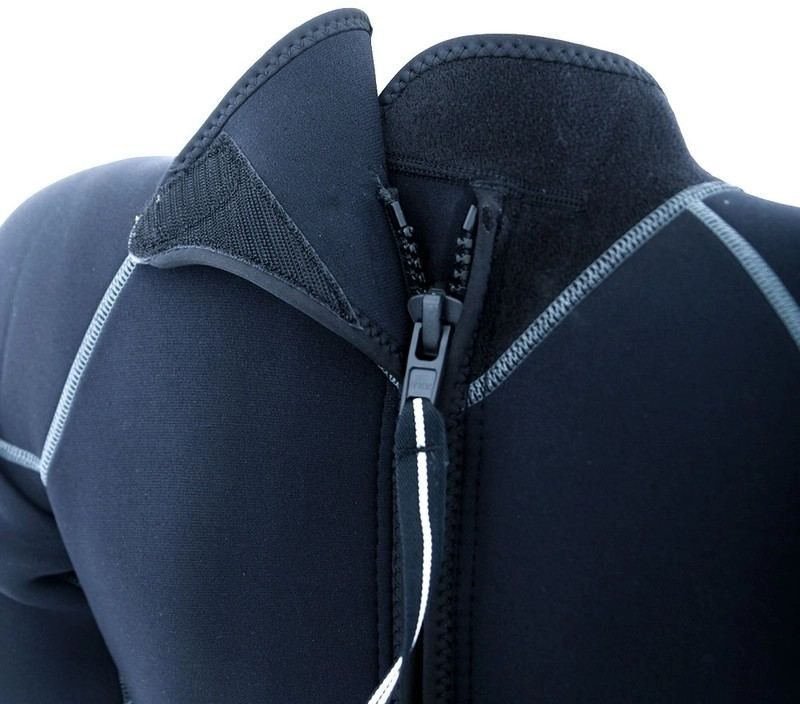
GBS (glued and blind-stitched) is the warmest common seam — the panels are glued, stitched blind so the needle never goes all the way through, and taped inside on cold-water suits. Flatlock is the flexible, breathable seam for warm-water suits — stitched through both panels, comfortable but lets a little water through. Sealed (taped) seams add a waterproof tape over a GBS seam for the coldest suits. Overlock is a fourth seam, for Lycra dive skins and light accessories only — it is not used on the fullsuits in this range (see below). Choose GBS for cool and cold water, flatlock for warm water, sealed for the coldest water.
The three seams compared
| Flatlock | GBS (glued and blind-stitched) | Sealed / taped (GBS + tape) | Overlock | |
|---|---|---|---|---|
| How it is made | Panels stitched through with a flat overlapping stitch | Panels glued edge to edge, then blind-stitched (needle does not go through) | GBS seam plus a waterproof tape melted over the inside | Fabric edges wrapped together and stitched |
| Water entry | Some — the stitch holes let water in | Very little — no through-holes | Least — tape blocks the seam line | Most — stitch holes plus a wrapped edge |
| Warmth | Lowest of the three | High | Highest | Lowest — not a warm seam |
| Flexibility | Best — soft, flat, stretches with the suit | Good | Good, slightly stiffer at the taped seam | Good |
| Comfort | Flat against skin, no ridge | Smooth inside, comfortable | Tape can feel slightly firmer inside | The stitch ridge can be felt |
| Durability | Good; stitching is visible and repairable | Good; glue plus stitch holds well | Best sealing; tape needs correct application | Strong and economical |
| Best water | Warm, 20 °C and up | Cool to cold, 8–20 °C | Coldest, below 12 °C | Warm, 20 °C and up |
| Best use | Shorties, warm-water fullsuits | All-round surf, dive, swim fullsuits | Sealed cold-water suits | Lycra dive skins, light accessories (0.5–1 mm) |
| Cost | Lowest | Middle | Highest | Low — economical, fast to sew |
Overlock — the fourth seam
Overlock wraps the fabric edges together and stitches them — fast and economical, with a clean, durable edge finish. It is the seam for Lycra dive skins and light neoprene accessories in 0.5–1 mm, where the item is thin and warmth is not the point. It is not waterproof and it is not used on the fullsuits in this range: a fullsuit needs flatlock, GBS or sealed seams. If a supplier offers you an "overlock wetsuit" for cool water, ask what seam the main panels use — overlock alone will let water in through every stitch.
Which seam for which suit
| Suit | Recommended seam | Why |
|---|---|---|
| 2 mm shorty | Flatlock | Warm water, flexibility and comfort matter most |
| Surf wetsuit 3/2 mm, chest-zip — men | GBS | Warmth without losing shoulder flexibility |
| Surf wetsuit 4/3 mm, back-zip — men | GBS, taped inside on chest and back | Extra sealing where cold water hits first |
| Scuba wetsuit 5 mm, back-zip — men | GBS, fully taped inside | Long dives need the seam to stay sealed |
| Scuba wetsuit 7 mm, back-zip — men | Sealed (GBS + tape), plus wrist and ankle seals on request | Coldest water — every seam must be sealed |
| Kids fullsuit | GBS | Warmth and durability for hard use |
What "blind-stitched" means
Blind stitching means the needle goes through only part of the foam — it never comes out the other side. That leaves no stitch holes for water to pass through. It is the single biggest difference between a warm suit and a cold suit at the same thickness. If a supplier offers a "GBS" suit at a flatlock price, ask to see the seam: a real GBS seam shows no stitch holes on the outside of the panel.
Seams and linings together
The seam is only half the warmth story — the lining is the other half. A lining is the fabric (or bare foam) on the inside of the suit. It decides how the suit feels against the skin, how easy it is to put on, and how much warmth it holds.
| Lining | Feel | Warmth | Best for |
|---|---|---|---|
| Nylon jersey | Smooth, tough, easy to put on | Standard | Every suit — the default lining |
| Thermal fleece (plush) | Soft, fleecy, warmer to the touch | Warmer — holds warmth better | Cold-water suits, 4/3 mm and up, chest and back panels |
| Smooth skin panels (CR neoprene skin) | Smooth rubber surface on the outside, not a lining | Cuts wind chill and water drag | Chest and back panels on surf and swim suits |
| Open cell (bare foam inside) | Bare foam against the skin, sticks close | Warmest fit — no lining layer for water to sit in | Spearfishing two-piece suits |
A thermal fleece lining feels warmer and holds warmth better, and is the usual choice for cold-water suits — full fleece lining on a 5–7 mm dive suit, or a fleece chest panel on a 4/3 mm surf suit. A smooth skin panel (CR neoprene skin — the smooth surface of the foam) on the chest and back cuts wind chill between sets and water drag while swimming; smooth skin marks more easily than nylon, so it is an option, not the default. An open-cell inside — neoprene foam with the bare foam cell exposed and no lining — is the spearfishing choice: it seals close to the skin and needs soapy water or talc to put on.
Tell us the seam and the lining together when you order — for example, "4/3 mm, GBS, taped inside, thermal fleece chest panel". A lining adds to the finished thickness, so confirm the finished figure on your sample.
Seam mistakes buyers make
- Ordering flatlock for cold water. A flatlock 5 mm suit lets water in
through every stitch. At 5 mm and up, GBS is the minimum for a suit sold as warm.
- Assuming "sealed" means waterproof. A sealed wetsuit is not a drysuit.
Sealed seams cut water entry to a minimum, but a wetsuit still lets a thin layer of water in — that is how a wetsuit works. We never call a wetsuit waterproof.
- Not checking the sample seam. Ask for a close-up photo of the sample
seam, inside and outside, before approving bulk. A photo of the whole suit cannot show the seam.
Internal links
- Thickness guide: Wetsuit Thickness ↔ Water Temperature
- Lining guide: Wetsuit Lining Guide
- Products: Scuba wetsuit 5 mm, back-zip — men,
Scuba wetsuit 7 mm, back-zip — men, Snorkel wetsuit 2 mm shorty, back-zip — men
- How to order: How to Order Custom Wetsuits and Samples