Answer first
A surf wetsuit is built for paddling: flexible shoulders, a 3/2 or 4/3 mm body, and a chest-zip or back-zip entry that does not restrict the stroke. For mild water (15–20 °C / 59–68 °F) order 3/2 mm; for cool water (11–16 °C / 52–61 °F) order 4/3 mm. GBS seams from 4/3 mm up keep cold water out without losing flexibility.
Thickness ↔ water temperature for surf
| Thickness | Water °C | Water °F | Best for |
|---|---|---|---|
| 2 mm shorty | 20–24 °C | 68–75 °F | Warm-water surf, summer sessions |
| 3/2 mm fullsuit | 15–20 °C | 59–68 °F | All-round surf — the most ordered surf suit |
| 4/3 mm fullsuit | 11–16 °C | 52–61 °F | Cool-water surf, longer sessions |
| 5/4 mm fullsuit | 8–12 °C | 46–54 °F | Cold-water surf, winter sessions |
| 6/5 mm hooded | 5–9 °C | 41–48 °F | Coldest surf, hooded |
Water-temperature ratings are a guide only, not a guarantee of warmth. Fit, wind, session length and personal cold tolerance change the answer.
Models for surf
| Model | Thickness | Features | Best for |
|---|---|---|---|
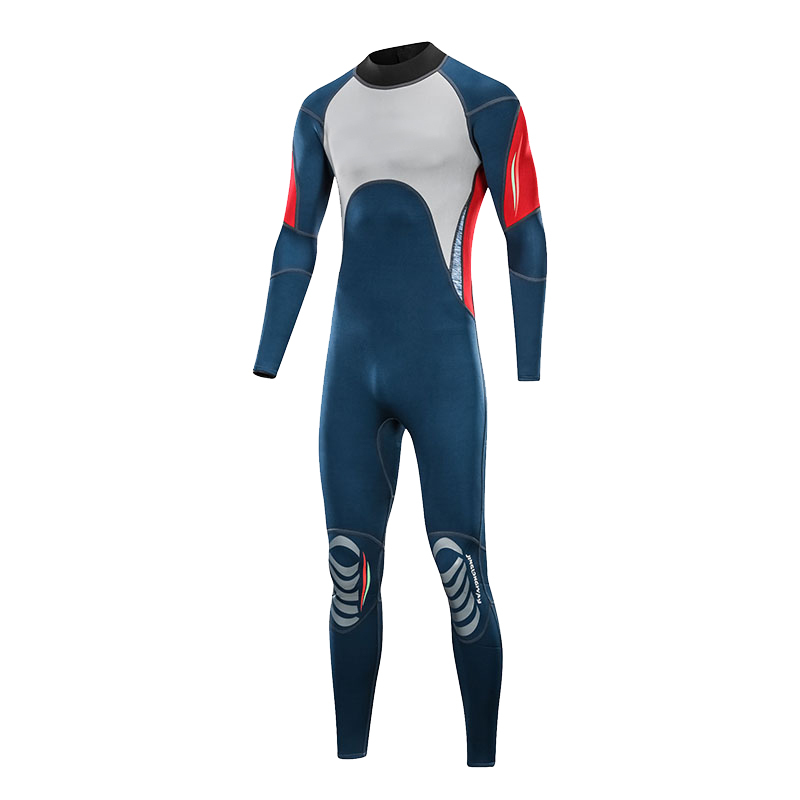
| Surf wetsuit 3/2 mm, chest-zip — men | 3/2 mm | Chest-zip entry, GBS seams, nylon lining | All-round surf brands, first custom order |
| Surf wetsuit 4/3 mm, back-zip — men | 4/3 mm | Back-zip entry, GBS seams taped inside, thermal chest panel | Surf brands selling on performance |
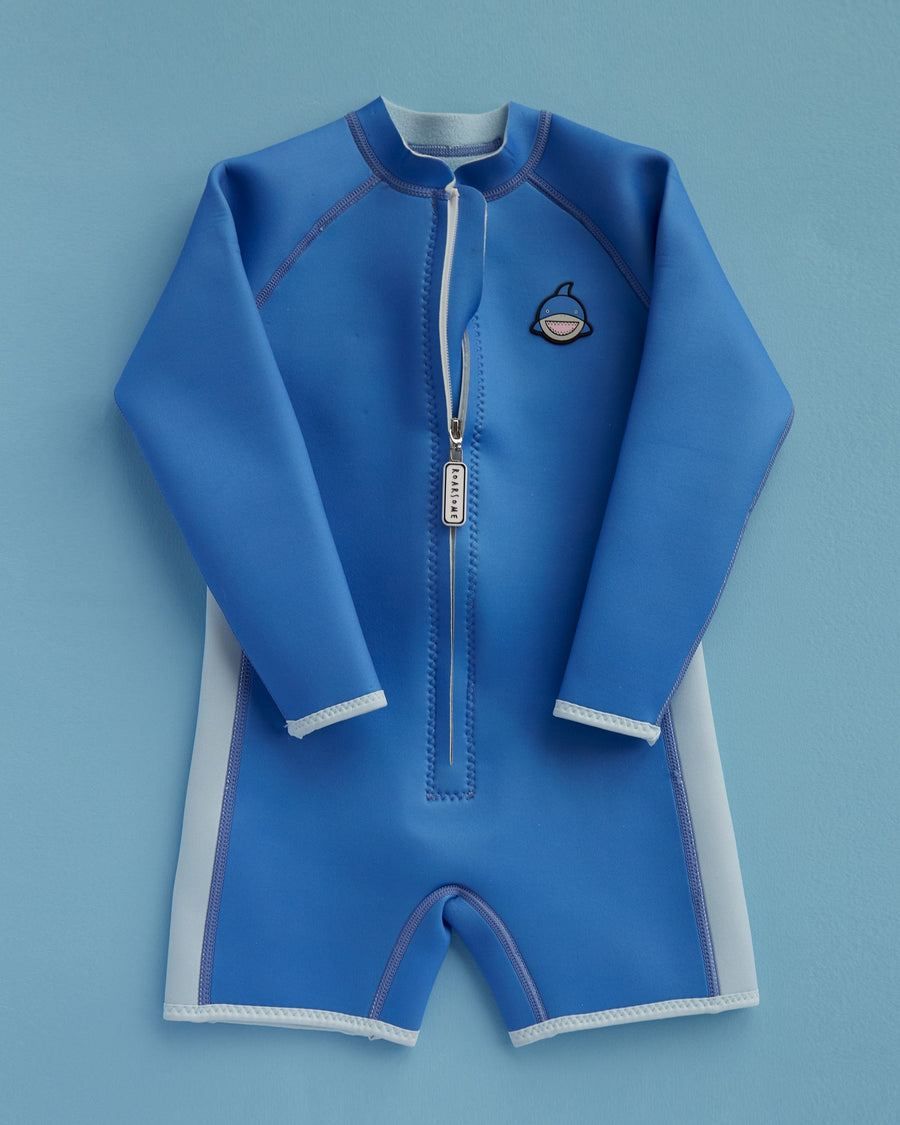
| Snorkel wetsuit 2 mm shorty, back-zip — men | 2 mm | Short arms and legs, flatlock seams, back-zip | Warm-water surf and rental fleets |
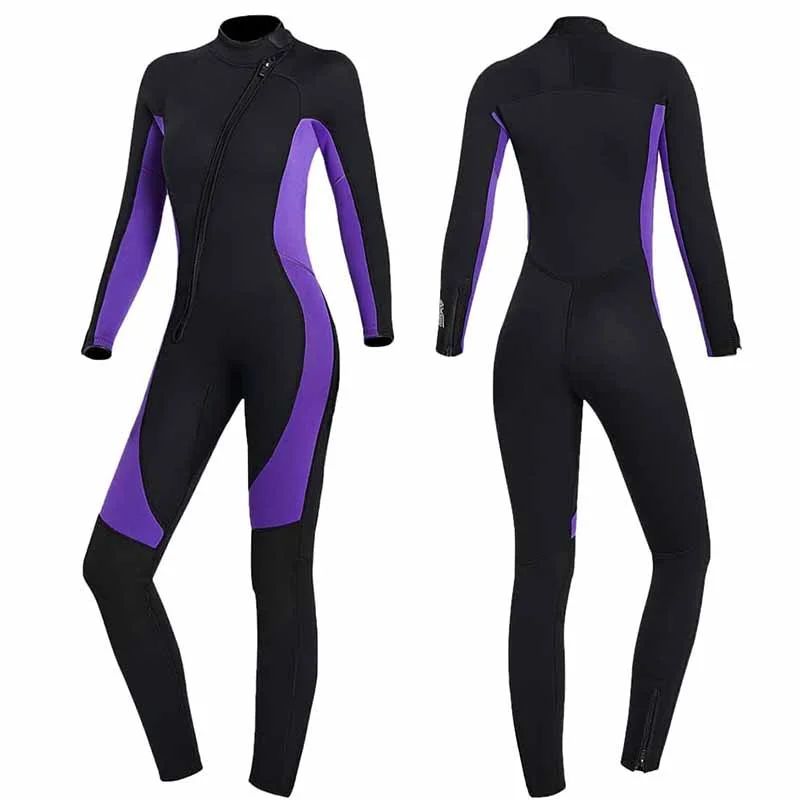
| Surf wetsuit 3/2 mm, chest-zip — women | 3/2 mm | Chest-zip entry, GBS seams, women's cut | Women's surf and swim |
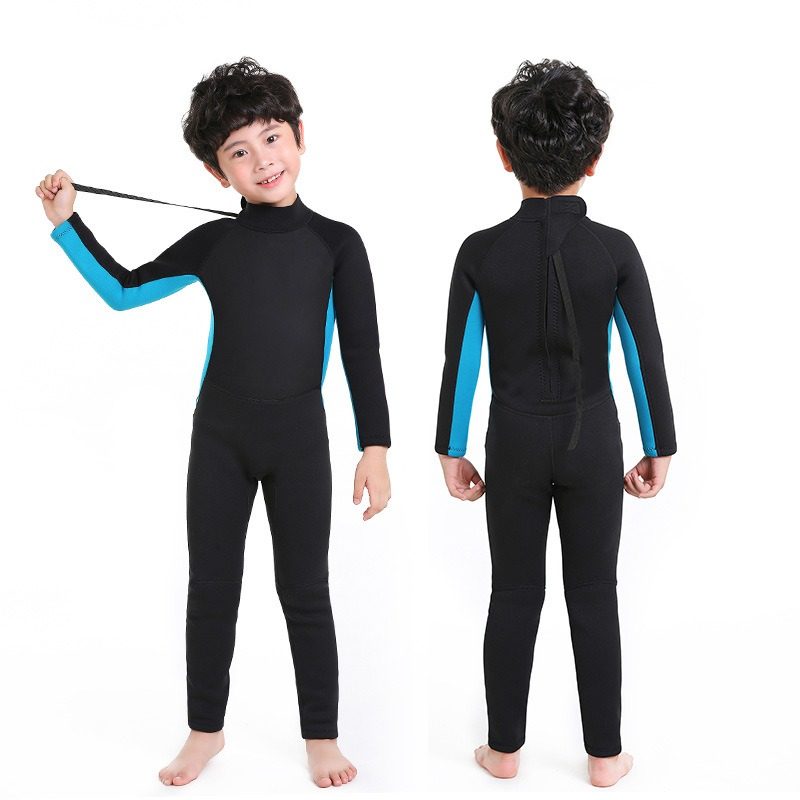
| Kids surf wetsuit 3/2 mm, back-zip | 3/2 mm | GBS seams, back-zip, reinforced knees | Kids surf schools and retail |
| Surf wetsuit 5 mm, back-zip — men | 5 mm | Back-zip entry, GBS seams taped inside | Cold-water surf, 8–12 °C |
| Kids surf wetsuit 5 mm, back-zip | 5 mm | GBS seams, back-zip, reinforced knees | Kids' cold-water surf |
What makes a good surf suit
- Shoulder flexibility first. The arms and shoulders use thinner neoprene
(2 mm on a 3/2 mm suit) and a flexible lining so paddling does not tire the wearer. A surf suit that is warm but stiff does not win a repeat order.
- Chest-zip or back-zip? Chest-zip gives a cleaner chest with less water
entry and more shoulder freedom; back-zip is easier to put on and take off, which rental fleets and schools prefer. Zip-free is the most flexible entry and the hardest to put on — offer it on pro models only.
- Knee reinforcement. Surf suits wear at the knees from pop-ups and
board contact. Reinforced knee panels are standard on our surf fullsuits — confirm the panel material on your sample.
- Smooth skin chest and back panels. CR smooth skin panels on chest and
back cut wind chill between sets. They mark more easily than nylon, so they are an option, not the default.
Series for surf
- Standard series — the all-round surf suit: SCR neoprene, GBS seams,
back-zip or chest-zip, your logo. See /series/standard/.
- Pro series — the performance surf suit: CR neoprene, chest-zip,
taped seams, thermal chest panel. See /series/pro/.
- Eco / Recycled series — the recycled-neoprene surf suit: recycled
nylon lining, same fit and thickness range. See /series/eco-recycled/.
Internal links
- Thickness guide: Wetsuit Thickness ↔ Water Temperature
- Seam guide: Wetsuit Seams: GBS vs Flatlock vs Sealed
- Size guide: Wetsuit Size Guide
- Products: Surf wetsuit 3/2 mm, chest-zip — men,
Surf wetsuit 4/3 mm, back-zip — men
- Fabric by the metre:
fabrics.neoprenecustom.com
FAQ
What to ask the factory: thickness (3/2 mm, 4/3 mm or 5 mm), entry (chest zip or back zip), men / women / kids sizes, colour number, and whether the suit needs smooth-skin chest and back panels.
Specifications
| Category | Surf Wetsuits |
|---|---|
| Thickness | 2–7 mm — see the thickness guide |
| Temperature guidance | See the thickness and temperature guide — bands are a guide only, not a guarantee of warmth |
| MOQ | typically 200 pcs |
| Sample time | typically 5–7 days |